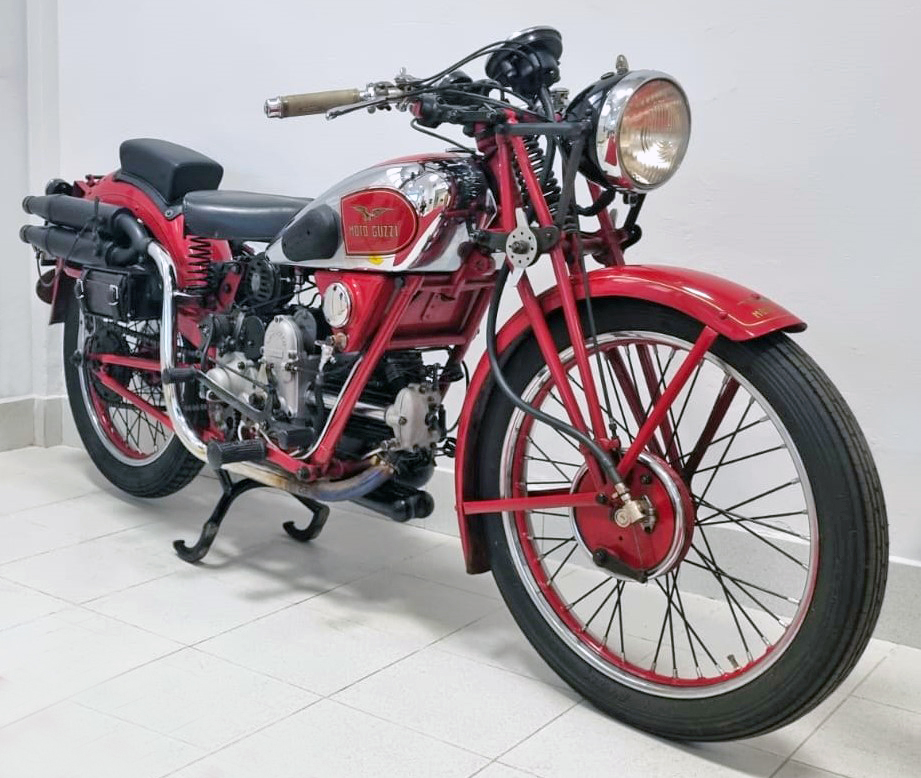
The Moto Guzzi G.T.C. 500 was developed in 1937 with the aim of providing private riders with a competitive machine for events reserved for production motorcycles or those closely derived from them. The project addressed the need for a 500 cc motorcycle capable of combining sound performance, mechanical reliability, and ease of handling, without resorting to overly complex or costly solutions. In this respect, the G.T.C. formed part of a design approach intended to make competitive motorcycling more accessible beyond the strictly official activities of the manufacturer. From a technical standpoint, the G.T.C. adhered to Moto Guzzi’s established engineering tradition. It was equipped with an air-cooled, horizontal single-cylinder four-stroke engine featuring overhead valves operated by pushrods and rockers. The dry-sump lubrication system contributed to ensuring consistent operation even under the most demanding conditions. In terms of overall performance, the G.T.C. ranked among the more noteworthy sporting motorcycles in its class during the latter half of the 1930s. The frame and, in particular, the chassis reflected a design philosophy centred on functionality, incorporating a rear suspension system to provide advantages in terms of stability, traction, and control on uneven or especially demanding courses. The G.T.C. was produced in a limited series, generally cited as 161 units between 1937 and 1938. Its technical and performance characteristics, together with the relatively small number of examples built, make this model particularly significant within the history of Moto Guzzi.
Click here to listen to the audioguide on izi.TRAVEL
otorcycle on temporary display, made in collaboration with the Associazione Siciliana Veicoli Storici - ASI